

Don't deploy from scratch in your first deployment
When you create a new server in DeployHQ, by default the whole repository will be uploaded to your server. This is great when you're starting afresh, but not useful if your files are already present on the server.
For example, the latest commit in your repository is ab3cd427 and the files up to reference ab3cd427 are already on your server, and you want to create a new server in DeployHQ but you don’t want it to re-deploy all the files that already exist on your server.
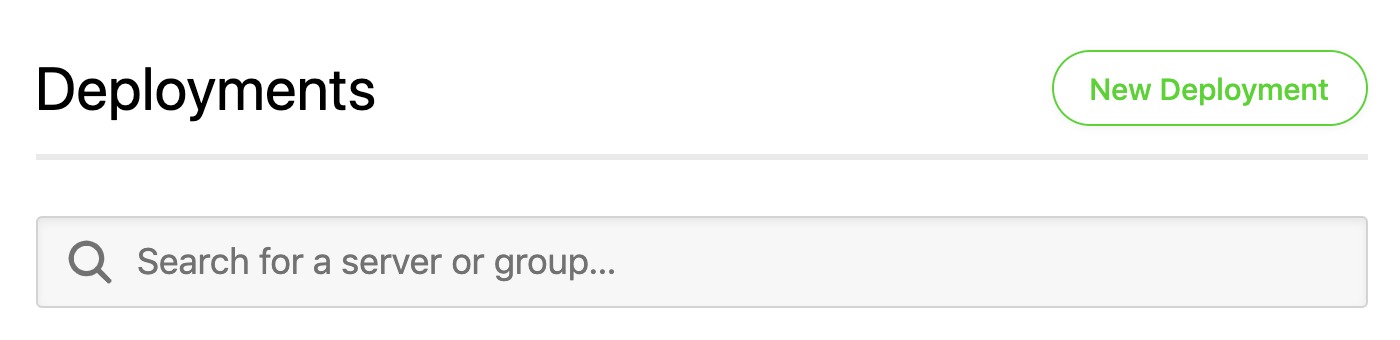
You can skip this by clicking New deployment to the top-right of the screen in your project to start a deployment:
Then, click the purple commit selection icon next to the start revision:

Select the commit at the top of the list, then click Choose Revision at the bottom of the dialog:
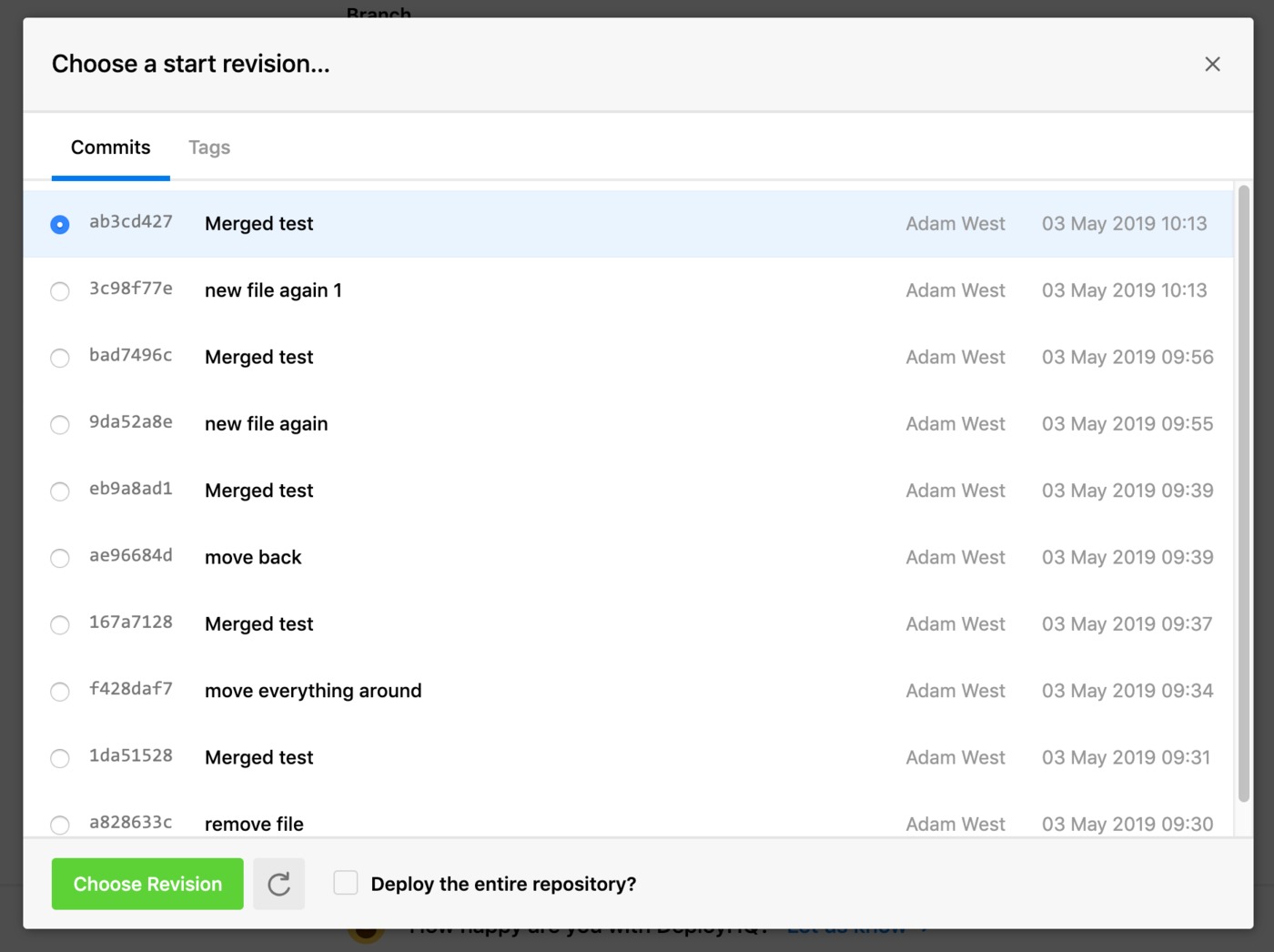
You'll now see that both the start and end revisions are the same.
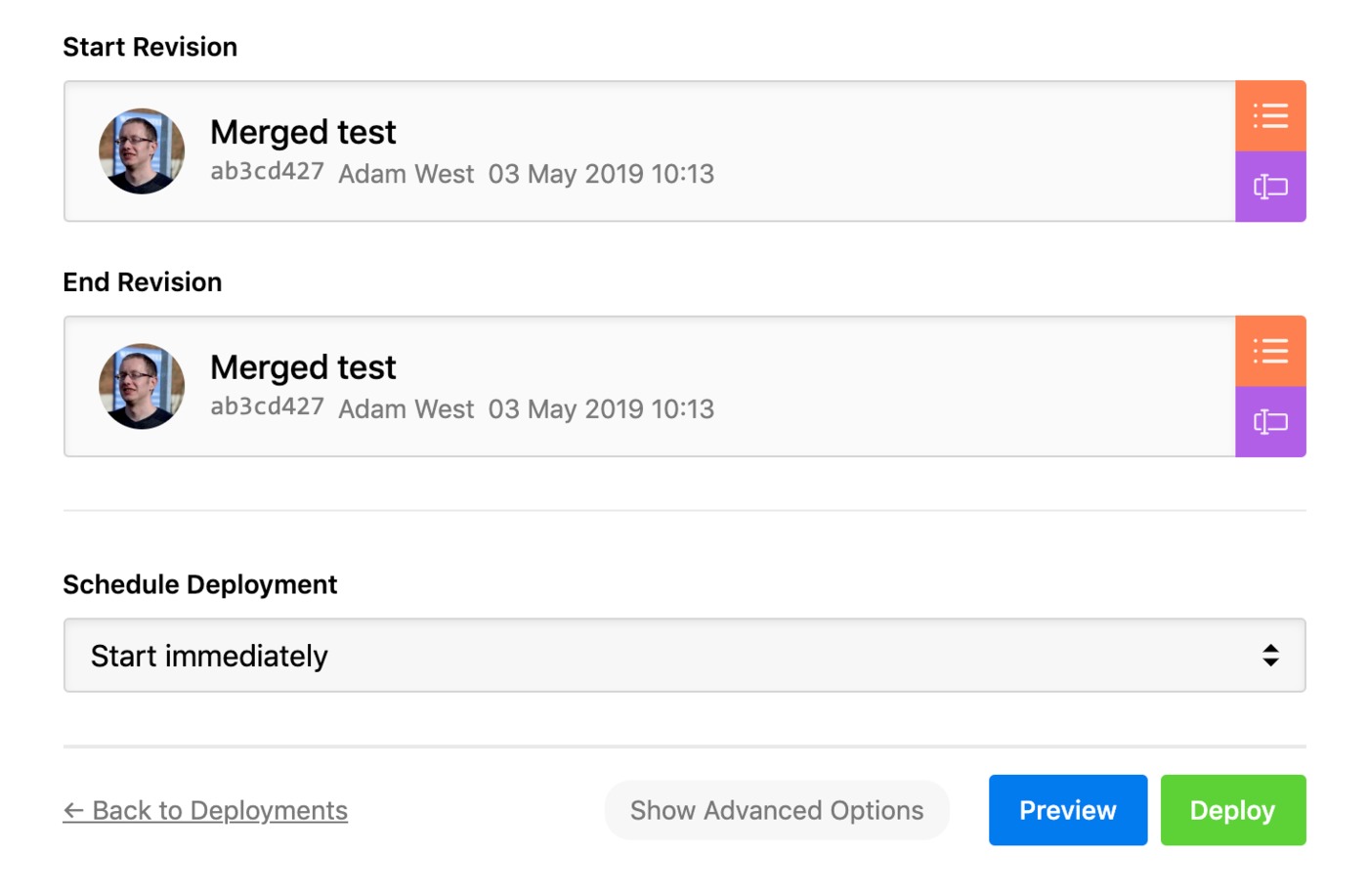
Click Deploy then you'll find that as a result of this, no files will be uploaded during the first deployment, and any deployments after this will just deploy the changes pushed as normal.
Build Pipeline
If your project uses the build pipeline, the very first deployment uploads every generated file -- there's no previous build manifest to compare against. From the second deployment onwards, DeployHQ compares the new build's manifest with the manifest stored from the previous successful deployment, and only uploads files whose contents have changed (alongside removing files that are no longer present in the build). Setting the start and end revisions to the same commit, as described above, does not change this: the build still runs and the manifest comparison still applies.
For a full explanation of how DeployHQ decides which files to upload, see How does DeployHQ determine which files to upload?.
If you have generated files that are never needed on the server, you can add excluded file rules to prevent them being uploaded.